
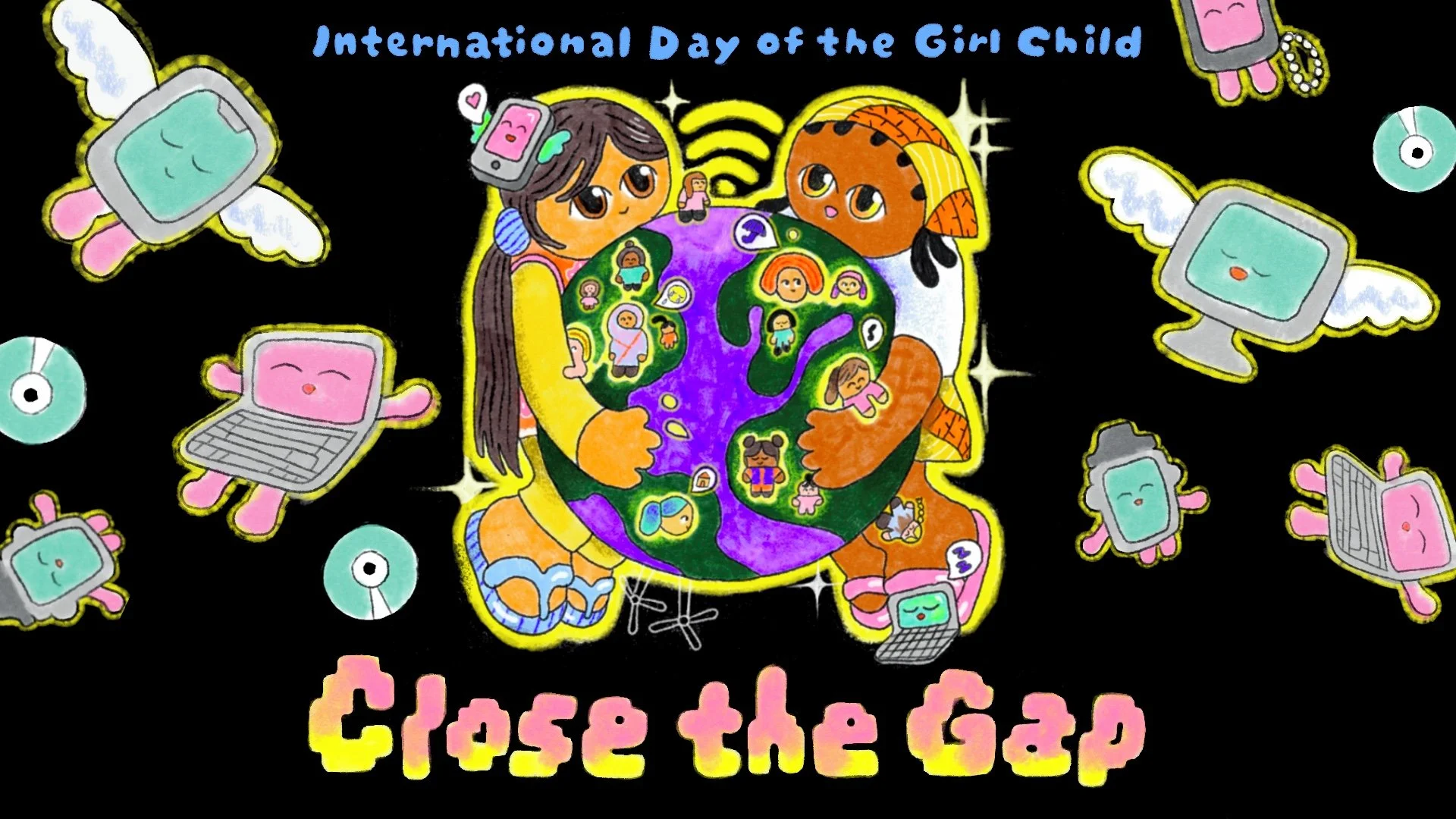
International Day of the Girl 2025
Across the world, 122 million girls are out of school. Nine out of 10 adolescent girls and young women in low-income countries are offline, while their male peers are twice as likely to be connected.
In total, 2.7 billion people remain offline, and the vast majority are girls and women.
Even within the same households, boys are more often given access to devices like mobile phones than girls. This divide cuts millions of girls off from the very tools they need to survive and thrive, especially in times of crisis.

Digital exclusion means girls are left behind - not only in the classroom, but also in acquiring the skills that open pathways to future jobs. There are 32 countries/territories in which adolescent girls and young women are 35% less likely than their male peers to have digital skills. Advanced skills like coding or programming remain out of reach for nearly all, reinforcing cycles of inequality.
And access alone is not enough. Online spaces must be safe. Around the world, adolescent girls face technology-facilitated gender-based violence - harassment, abuse, and exploitation that silence their voices and drive them offline. The challenge is not just to connect girls, but to connect them safely and meaningfully.
To mark International Day of the Girl Child 2025 on October 11, Evoca Foundation - together with Giga, a UNICEF and International Telecommunications Union (ITU) initiative - is shining a light on this urgent issue. A new animated film, “Close the Gap,” brings to life the stories of connection and disconnection: the possibilities that open when girls are online, and the inequities that persist when they are not.
In line with this year’s UN theme, “The girl I am, the change I lead: Girls on the frontlines of crisis,” Evoca’s campaign highlights digital access as a lifeline and a launchpad.
For girls navigating conflict, climate breakdown, economic precarity or displacement, access to the internet is not simply a luxury. It is a bridge to education, a channel to find community and solidarity, and a platform to raise their voices where decisions are made.
When girls are connected - safely and affordably - they can chart their own futures, strengthen their communities and transform the world. Closing the gender digital divide is not only a matter of equity. It is a matter of justice.
Close the Gap
Offline by Design,
Online by Right
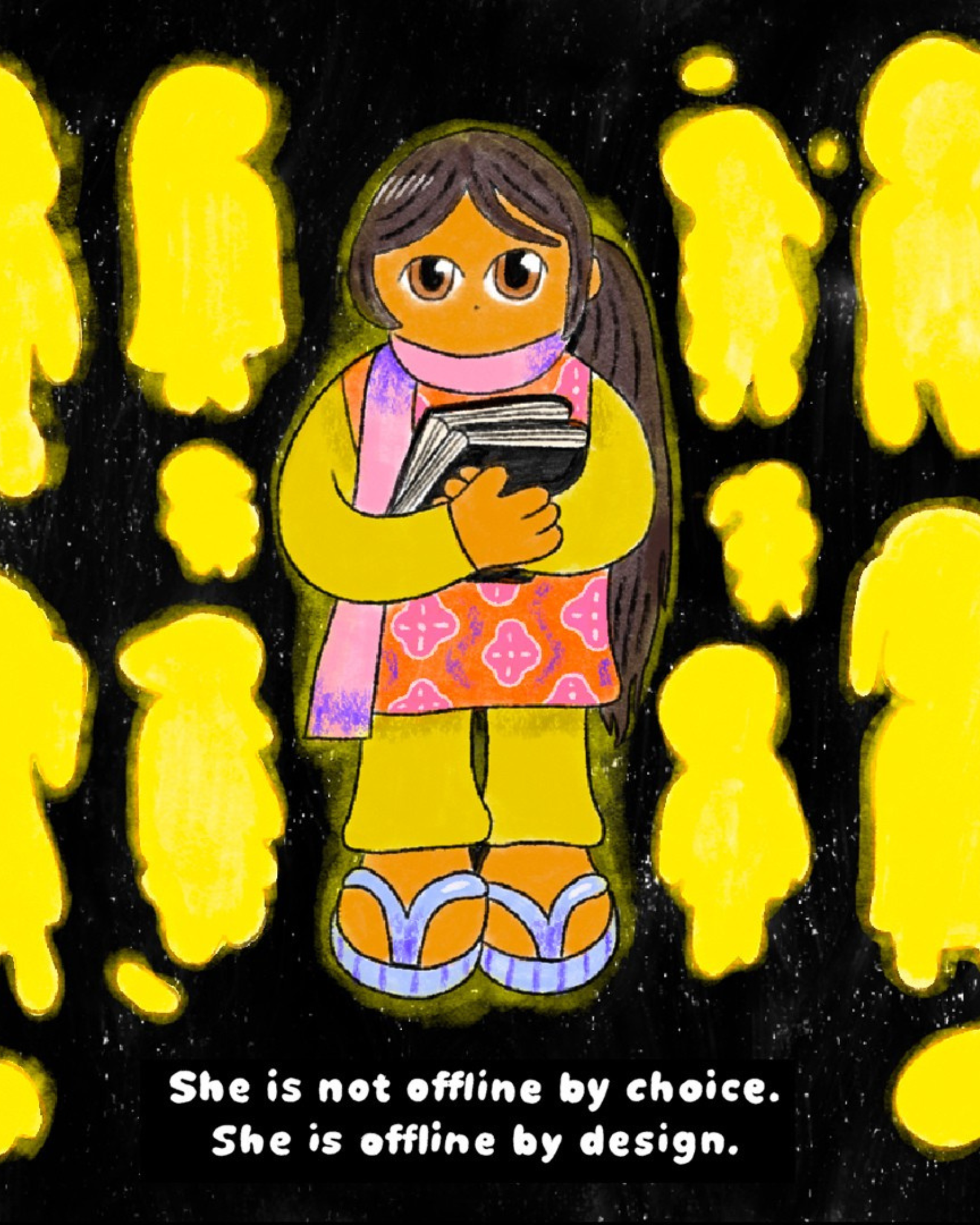
She is not offline by choice.
She is offline by design.
By borders drawn without her voice.
By policy written in boardrooms, she will never enter.
By towers that rise everywhere but near her.
But give her the signal.
Give her the code.
Watch what she builds.
In a quiet village, one girl logs on.
For the first time.
The world opens.
She learns to grow food differently.
Starts a business.
Finds words for what she always knew.
She turns knowledge into resistance.
Turns connection into freedom.
Turns a phone into a map of her future.
This is not about screens.
It is about sovereignty.
About voice.
About the futures we are willing to fund.
Digital access is not a luxury.
It is not a gift.
It is her right.
Close the gap.
Let every girl in.
ABOUT THE ARTIST
Cécile Cuny is an illustrator who lives and works in Brussels. Inspired by retro anime, folklore and her love for cute personified objects, she builds a colourful universe where wide-eyed girls and their friends are at the heart of the story, carrying both playfulness and deeper meaning.
About Giga
This campaign is delivered in partnership with Giga, the UNICEF and ITU initiative working to connect every school in the world to the internet. Giga’s mission speaks to the heart of this year’s Day of the Girl theme: connection as a lifeline and a launchpad. Schools are not only centres of learning but vital gateways to opportunity, especially for girls on the frontlines of crisis. By expanding access, Giga is helping create a future where every girl can participate, learn and lead in the digital world.
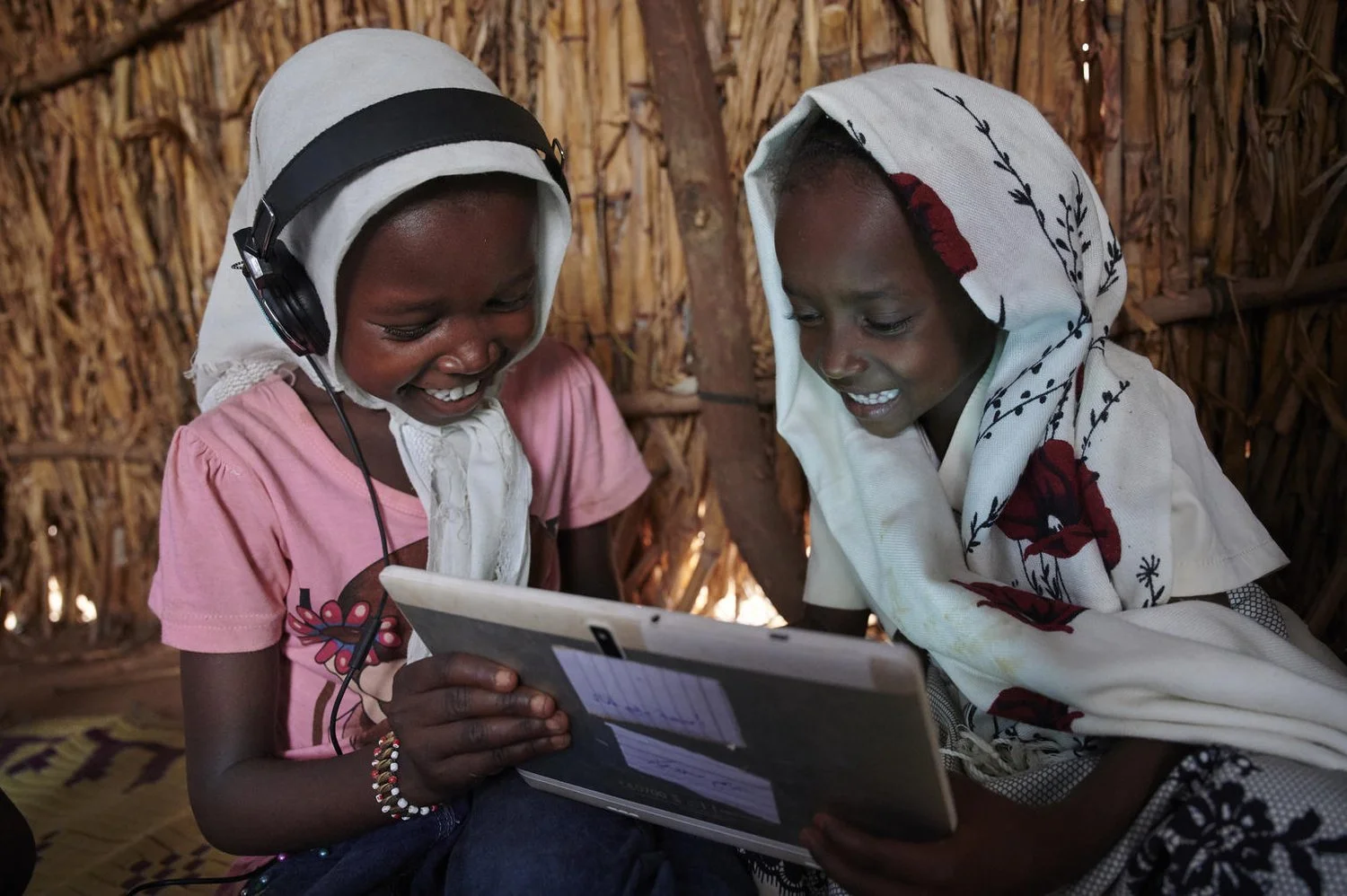
Darlene’s Story
Darlene is a 17 year old Congolese student living in the Kakuma refugee camp in Kenya and attending Brightstar Integrated Secondary School. Connectivity hardware provided by Giga delivered internet connection throughout the school, including in the library and the school office. It was using this internet connection that Darlene taught herself to code. With her fellow student Sala, Darlene went on to build a website for her school, which helps the school manage time and administrative challenges, and enhances learning activities in class.
Now, Darlene wants to finish her studies and train as a software engineer.
She knows it won’t be easy, but says “I trust myself. I believe in myself. I can do it.”
Resources and Further Reading
UNICEF - “Bridging the Gender Digital Divide”
A data-driven report and resource hub about disparities in internet use, digital skills and mobile ownership among girls and young women.UNESCO - Closing the Digital Divide for Women and Girls in Africa
Initiative focused on infrastructure, training and gender-responsive digital education in Africa.UNICEF - Advancing Girls’ Education through Digital Learning (PDF)
A strategic framework on how digital learning can help reach girls, with attention to access, safety, equity.EdTech Hub - “How do we support the use of EdTech for girls?”
Practical guidance and evidence on how to make educational technology more inclusive for girls.Family Online Safety Institute (FOSI)
An international non-profit working to promote safer online environments, especially for children and youth.Safe Sisters
A resource and guide specifically for women and girls about digital safety practices and awareness.Cybersmile Foundation
An international nonprofit tackling cyberbullying and digital abuse; offers support, education and resources.Theirworld — Digital Divide Resource
(“The Key”)
A campaign hub focused on how digital divides affect education and what interventions help.